20 Organic Modern Interior Design Ideas for a Calm, Natural Home
Want a home that feels calm, natural, and timeless? These organic modern interior design ideas blend clean lines with natural materials, earthy colors, and soft textures, so every room feels warm, relaxed, and effortlessly stylish.
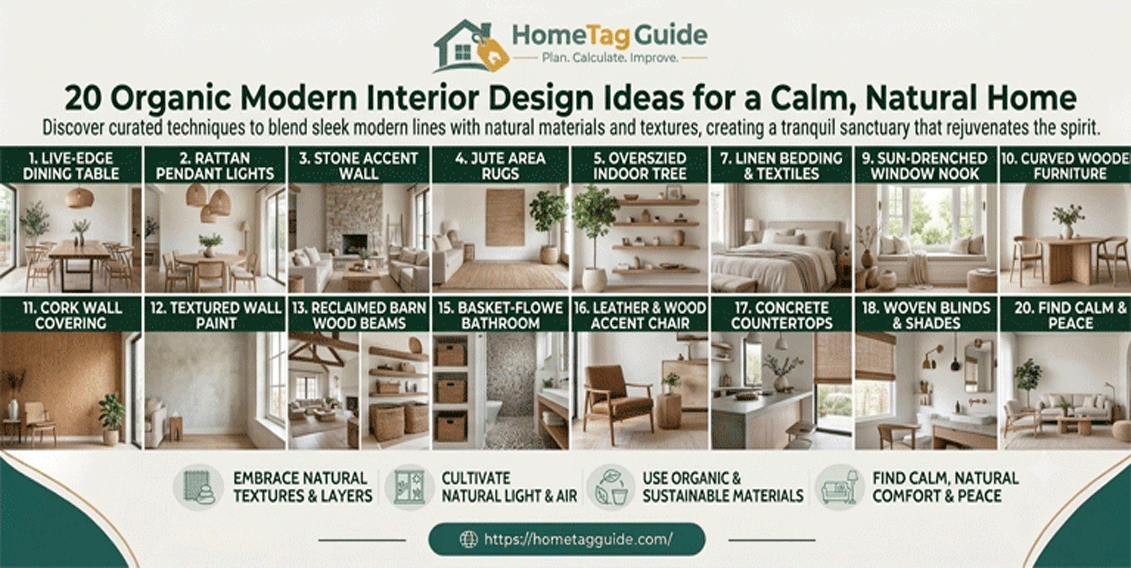
Close your eyes and picture the calmest room you have ever walked into. Chances are it had soft light, natural materials, and nothing shouting for attention. That feeling is exactly what organic modern design is all about.
This style takes the clean lines of modern design and blends them with the warmth and imperfection of nature. Think wood grain, woven textures, handmade ceramics, and plants, all in a quiet, earthy palette. Below are 20 organic modern interior design ideas you can use in any room, from small touches to bigger moves. Save your favorites and mix them to suit your home.
| What is organic modern design?
Organic modern design combines the clean lines of modern style with natural materials, earthy colors, soft curves, and handmade details. The goal is a calm, timeless space that feels connected to nature. |
| Short on time? Start with these 5
Idea 1 (earthy palette), Idea 10 (linen and cotton), Idea 11 (wool or jute rug), Idea 14 (plants and branches), and Idea 16 (natural lighting). Together they shift a room toward organic modern in a weekend. |
The Organic Modern Formula
Almost every organic modern room is built from the same four ingredients. Keep them in mind as you read:
- Natural materials: wood, stone, linen, wool, clay, and rattan.
- Earthy neutrals: warm white, sand, stone, and clay tones.
- Soft shapes: curves and gentle lines instead of sharp angles.
- Quiet decor: a few handmade, meaningful pieces rather than lots of accessories.
Color and Foundations: Build a Natural Base
1. Start With an Earthy Neutral Palette
Best for: Anyone starting from scratch
Organic modern begins with colors you would find on a quiet beach or a forest floor.
Think warm white, oatmeal, stone, clay, and soft mushroom. These shades feel calm and timeless, and they let natural textures take center stage. Keep the palette to three or four tones and vary the depth, so the room feels layered but never busy.
| Get the look
Warm white walls, a stone-colored sofa, clay-toned cushions, and mushroom-gray curtains. |
2. Use Limewash or Plaster Walls
Best for: Adding depth without decor
Flat paint is fine. Walls with a soft, cloudy finish are unforgettable.
Limewash and plaster-style finishes have gentle variations in tone, so the wall seems to glow and shift with daylight. They give a room the lived-in, handcrafted feel that sits at the heart of organic modern design.
| Try this
Try a single limewashed wall behind the sofa or bed before committing to a whole room. |
3. Choose Wide-Plank Natural Wood Floors
Best for: Grounding a whole home
Wood floors are the quiet foundation of an organic modern home.
Wide planks in white oak or a light natural finish show off the grain and make the space feel open. A matte or low-sheen finish looks more natural than a high-gloss one, and it hides everyday scuffs better.
| Pro tip
Choose a finish that keeps the wood’s natural color rather than a heavy red or orange stain. |
4. Add Black Accents to Ground the Room
Best for: Preventing a soft palette from feeling flat
A touch of black is the secret to a polished organic look.
Slim black window frames, a metal floor lamp, or iron picture frames add crisp contrast against soft neutrals. Use black sparingly, in two or three spots, so it feels like a deliberate accent and not a heavy theme.
| Budget swap
Use matte black spray paint on an old lamp base or a set of frames for an instant contrast piece. |
Furniture and Shape: Choose Pieces With Soul
5. Pick Curved, Rounded Furniture
Best for: Softening sharp or boxy rooms
Nature has very few straight lines. Your furniture does not need many either.
Round coffee tables, curved sofas, arched mirrors, and pebble-shaped side tables give the room a gentle flow. If you cannot replace large pieces, begin with one or two small curved items.
| Pro tip
Pair one curved piece with a straight-lined piece to keep the room balanced and modern. |
6. Showcase a Solid Wood or Live-Edge Table
Best for: Dining rooms and entryways
One great wood table can anchor an entire room.
Solid wood or live-edge tables show real grain, knots, and natural variations that mass-produced furniture cannot copy. Let the table be the star by surrounding it with simple, quiet chairs and minimal decor.
| Get the look
A chunky oak dining table with linen-upholstered chairs and a single ceramic vase. |
7. Weave in Rattan, Cane, and Wicker
Best for: Adding natural texture to any room
Woven materials bring lightness and a handmade feel.
Rattan chairs, cane cabinet doors, and wicker baskets add airy texture and break up solid blocks of wood or fabric. A single woven piece goes a long way, so choose carefully and avoid mixing too many styles.
| Budget swap
Add cane webbing to an old cabinet front or buy secondhand woven chairs and refresh them. |
8. Add Sculptural Stone Pieces
Best for: Making a focal point from natural material
Stone brings weight and an earthy, ancient feel to a soft room.
A travertine coffee table, marble side table, or stone bowl provides a cool, solid contrast to warm textiles. The natural patterns in stone mean each piece looks a little different, which suits the style perfectly.
| Pro tip
Look for honed or matte finishes. They feel more natural and show fewer fingerprints than polished stone. |
9. Go Low and Relaxed With Seating
Best for: Cozy living rooms and lounges
Organic modern is meant to be lived in, not just looked at.
Deep, low-profile sofas and plush lounge chairs invite you to sink in and stay a while. Choose cushions in natural fabrics such as linen or cotton and keep the shapes simple and generous.
| Small-space win
In a small room, choose one deep armchair instead of a full sofa and pair it with a slim side table. |
Textiles and Texture: Layer It Softly
10. Layer Linen and Cotton Fabrics
Best for: Bedrooms and living rooms
Natural fabrics breathe, wrinkle gently, and look better with age.
Linen curtains, cotton throws, and washed-linen bedding give rooms an effortless, relaxed look. Slight wrinkles are part of the charm, so there is no need to iron everything flat.
| Get the look
A washed-linen duvet, cotton waffle throw, and linen curtains in oatmeal and cream. |
Which Idea Is Right for You? A Quick Style Finder
Not sure where to begin? Match your goal to the ideas that solve it fastest.
| If your goal is… | Start with… | Ideas |
| A quick, low-cost refresh | Earthy palette, linen fabrics, plants, handmade ceramics | 1, 10, 14, 15 |
| More texture in a plain room | Limewash wall, boucle, wool or jute rug | 2, 11, 12 |
| A statement piece | Live-edge table, travertine table, curved sofa | 5, 6, 8 |
| A cozy, relaxed living room | Low seating, layered textiles, soft lighting | 9, 10, 16 |
| A natural, calm feel on a budget | Woven baskets, framed art, black accents | 4, 7, 17 |
| Your turn
Which natural material would you add to your home first: wood, stone, linen, or rattan? Tell us in the comments. |
11. Anchor the Room With a Wool or Jute Rug
Best for: Open-plan and hard-floor homes
The right rug ties everything together.
A chunky wool rug adds softness, while jute and sisal bring a natural, earthy edge. Choose a neutral rug large enough for the front legs of your furniture to sit on it, so the seating feels connected.
| Pro tip
Layer a smaller soft rug over a jute base for extra depth and comfort. |
12. Add Boucle and Nubby Fabrics
Best for: Adding tactile interest to neutral rooms
In a neutral room, texture does the talking.
Boucle chairs, nubby throw pillows, and knit blankets add visual warmth without adding color. Mix a few different textures in similar tones for a rich look that stays calm.
| Try this
Combine one boucle piece, one smooth linen piece, and one chunky knit in the same color family. |
13. Dress Windows in Natural Materials
Best for: Softening hard window lines
Window treatments set the mood for the whole room.
Linen drapes, woven bamboo shades, and sheer panels filter daylight into a soft, glowing light. Hang drapes high and wide so the windows look larger and the room feels taller.
| Budget swap
Use ready-made linen curtains and a ceiling-mounted rod to get a custom look for less. |
Plants and Decor: Bring the Outdoors In
14. Fill Corners With Plants and Branches
Best for: Rooms that feel flat or empty
Greenery is the most natural decor of all.
An olive tree, a tall fiddle leaf fig, or a simple vase of branches brings life and a sculptural silhouette to a corner. Choose plain ceramic, clay, or woven planters so the plant stays the hero.
| Pro tip
If you struggle to keep plants alive, choose dried stems or branches. They look organic and need no care. |
15. Display Handmade Ceramics and Imperfect Pieces
Best for: Shelves, coffee tables, and consoles
Imperfection is a feature, not a flaw.
Hand-thrown bowls, uneven vases, and matte glazes show the touch of the maker. The wabi-sabi idea of finding beauty in imperfection fits organic modern design perfectly. Group a few pieces in different heights rather than spreading them out.
| Get the look
A trio of matte ceramic vases in cream, sand, and charcoal on a wooden tray. |
16. Choose Sculptural, Natural Lighting
Best for: Adding a focal point from above
Lighting can be art, too.
Paper lanterns, rattan pendants, and plaster or alabaster lamps cast a soft, diffused glow. Use warm white bulbs (around 2700K) and layer floor, table, and ceiling lights so you can set the mood at any time of day.
| Small-space win
Swap a plain ceiling fixture for one large paper or rattan pendant to add instant personality. |
17. Hang Organic, Earthy Art
Best for: Walls that need a finishing touch
Art for organic modern rooms feels quiet and natural.
Look for abstract pieces in earthy tones, botanical sketches, textile art, or black-and-white landscape photos. Frame them in thin wood or black frames, and leave plenty of white space around each piece.
| Try this
Frame a piece of linen, a pressed leaf, or a sketch yourself for a personal, low-cost wall display. |
Light, Rooms, and Finishing Touches
18. Maximize Natural Light
Best for: Dark or enclosed spaces
Natural light is the heart of every organic modern room.
Keep windows clear, use sheer curtains, and place mirrors to reflect daylight deeper into the room. Light neutral colors and matte finishes help spread brightness without glare.
| Pro tip
Keep furniture away from windows so light moves freely through the space. |
19. Create an Organic Modern Bedroom
Best for: Making your sleeping space a retreat
Your bedroom should feel like a quiet hotel suite in the woods.
Start with a low wood or upholstered bed in a natural fabric, then add layered linen bedding in cream, sand, and soft gray. Use simple wood nightstands, a woven basket for blankets, and warm lamps for a gentle evening glow.
| Get the look
A low oak bed frame, oatmeal linen bedding, ceramic lamps, and a jute rug underfoot. |
20. Design a Spa-Like Bathroom
Best for: Turning a daily routine into a ritual
A bathroom is a perfect place for natural materials.
Use stone or tadelakt-style walls, a simple wood vanity, a woven basket for towels, and matte black or brushed fixtures. Add a plant that likes humidity and a stone tray for soap to complete the look.
| Budget swap
Update a plain vanity with a stone-look countertop remnant and new matte fixtures instead of replacing the whole unit. |
5 Weekend Upgrades for an Organic Modern Look
You do not need a full redesign. Try these quick changes:
- Swap bright white bulbs for warm white and add one paper or rattan lamp.
- Replace synthetic throw pillows with linen or cotton covers in earthy tones.
- Add a jute or wool rug under the main seating area.
- Place a large plant or a vase of branches in an empty corner.
- Clear surfaces and style a small group of handmade ceramics on a wooden tray.
Common Organic Modern Mistakes to Avoid
- Going too beige. Without contrast and texture, a neutral room can feel flat. Add black accents and different materials.
- Using faux materials that look plastic. Choose real or convincing wood, stone, and linen where you can.
- This style relies on breathing room. Choose fewer, better pieces.
- Matching everything. A mix of slightly different woods and textures looks more natural than a perfect set.
- Forgetting warm light. Cold bulbs can ruin the soft, glowing mood.
Organic Modern Planning Checklist
- Choose three or four earthy neutral colors.
- Pick two or three natural materials to repeat, such as oak, linen, and stone.
- Add at least one curved piece to each main room.
- Layer at least three textures in every room.
- Include one plant or branch arrangement per room.
- Use warm white bulbs and layered lighting.
- Add one handmade or imperfect piece that you truly love.
Conclusion
Organic modern design is about slowing down and surrounding yourself with things that feel real. Start with an earthy palette, bring in a few natural materials and textures, and let light and plants do the rest. Little by little, your home will feel calmer, warmer, and more like you.
Want more inspiration? Read our Warm Modern Interior Design Ideas article, explore the Interior Design category on Hometagguide.com, and check our guides on the cost of interior design per room and the cost to hire an interior designer to plan your budget.
Frequently Asked Questions
What is organic modern interior design?
Organic modern design blends modern simplicity with natural materials, earthy colors, soft curves, and handmade details. The result is a calm, warm, and timeless look.
How is organic modern different from warm modern?
Both styles feel cozy, but organic modern leans more heavily on raw natural materials, imperfect handmade pieces, and a nature-inspired palette. Warm modern is often a little sleeker and focuses on softening modern design with warm tones and lighting.
What colors work best for organic modern interiors?
Warm white, cream, oatmeal, sand, stone, clay, olive green, and soft brown are classic choices. Black can be added in small amounts for contrast.
What materials define the organic modern style?
Natural wood, stone such as travertine or marble, linen, cotton, wool, jute, rattan, clay, and plaster are the main materials. Handmade ceramics and woven pieces add character.
Can I create an organic modern look on a budget?
Yes. Start with paint, linen textiles, plants, secondhand wood or woven pieces, and warm lighting. Add larger statement pieces gradually over time.
Is organic modern the same as boho or Japandi?
No. Boho is more colorful and layered, and Japandi is stricter and more minimal. Organic modern sits in between, with a calm palette, natural textures, and a bit more softness than strict minimalism.
What kind of lighting suits organic modern spaces?
Warm white lighting (around 2700K) in soft shapes such as paper lanterns, rattan pendants, and plaster or ceramic lamps. Layer floor, table, and ceiling lights for a relaxed glow.
Is organic modern design going out of style?
It is unlikely to. The style relies on natural materials, calm colors, and simple shapes, which stay relevant over time and are easy to update with new accessories.