
20 Natural Interior Design Ideas to Bring the Outdoors Home
Want your home to feel as calming as a walk in the woods? These natural interior design ideas use real materials, daylight, plants, and earthy colors, so every room feels fresh, healthy, and connected to the outdoors.
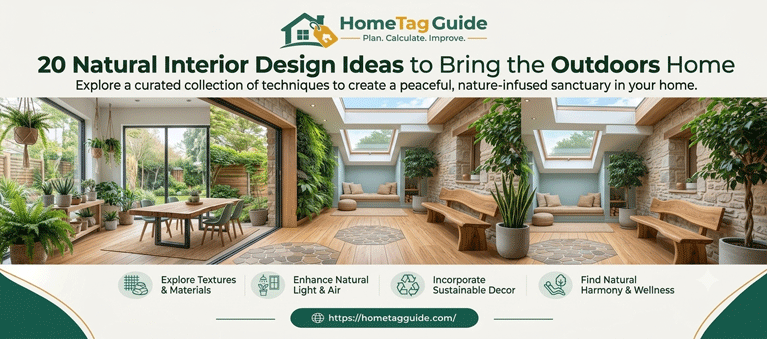
Remember the last time you stood in a forest, on a beach, or in a quiet garden? Your shoulders dropped, your breathing slowed, and everything felt a little calmer. Natural interior design is about capturing that feeling at home.
This style uses real materials, plenty of daylight, living plants, and colors borrowed from the landscape. Below are 20 natural interior design ideas that cover materials, light, plants, color, and sustainable choices. Save your favorites and start with whatever feels easiest.
| What is natural interior design?
Natural interior design uses natural materials, daylight, fresh air, plants, and earth-inspired colors to create a calm, healthy home that feels connected to the outdoors. |
| Short on time? Start with these 5
Idea 6 (maximize daylight), Idea 10 (group houseplants), Idea 13 (branches and found objects), Idea 15 (natural fabrics), and Idea 4 (natural fiber rug). They bring nature in with very little effort. |
Natural Design Formula
Almost every natural interior follows the same four principles. Keep them in mind as you read:
- Real materials: wood, stone, clay, linen, wool, and plant fibers.
- Daylight and air: open windows, clear views, and soft, warm lighting.
- Living things: plants, herbs, branches, and natural objects.
- Earth colors: greens, browns, sands, and soft sky tones.
Natural Materials: Build With the Real Thing
1. Choose Solid or Reclaimed Wood
Best for: Furniture, shelves, and beams
Real wood has a warmth and character that nothing else can copy.
Solid oak, walnut, pine, and reclaimed timber show their grain, knots, and small imperfections. Use wood for a dining table, shelves, or a statement beam. Reclaimed wood adds history and is a sustainable choice too.
| Pro tip
Keep one main wood tone in each room and add a second tone only if it shares the same warm or cool undertone. |
2. Add Natural Stone Surfaces
Best for: Kitchens, bathrooms, and tables
Stone brings the feeling of a riverbank or a mountain into your home.
Marble, travertine, slate, and granite add weight, texture, and variation to counters, fireplaces, and tabletops. Honed or matte finishes look softer and more natural than polished ones.
| Budget swap
Use a stone remnant for a small side table or bathroom vanity top instead of a full slab. |
3. Display Clay, Terracotta, and Earthenware
Best for: Shelves, tables, and plant corners
Handmade clay pieces feel grounded and honest.
Terracotta pots, rough ceramic bowls, and earthenware vases bring warm, earthy color and a handcrafted look. Group them in odd numbers and mix heights for a relaxed display.
| Get the look
Three terracotta pots of different sizes on a wooden tray with a trailing plant. |
4. Cover Floors With Natural Fibers
Best for: Living rooms and hallways
Natural fibers feel good under your feet and look good in the room.
Jute, sisal, seagrass, and wool rugs bring a soft, earthy texture. They suit almost any style and are often more affordable than synthetic options. Layer a wool rug over jute for extra comfort.
| Pro tip
Jute is rougher than wool, so use it in living rooms and hallways and save the softest rugs for bedrooms. |
5. Try Clay or Lime Plaster Walls
Best for: Adding depth to plain walls
A wall can feel alive when it has a natural finish.
Lime plaster and clay-based paints have a soft, matte look with slight variation that changes with the light. They bring a calm, earthy atmosphere that standard flat paint cannot match.
| Try this
Test a sample board in your room and look at it at different times of day before you commit. |
Light and Air: Let the Outdoors Flow In
6. Maximize Daylight
Best for: Dark or enclosed rooms
Natural light is the heart of every natural interior.
Keep windows clear, use light, sheer window treatments, and place mirrors to bounce daylight deeper into the room. Light wall colors and matte finishes spread the brightness evenly.
| Pro tip
Keep tall furniture away from windows so light can travel across the room. |
7. Frame the View
Best for: Rooms with a garden, tree, or sky view
If you have a great view, build the room around it.
Place a sofa, desk, or reading chair facing the window. A window seat or a simple bench by the glass invites you to sit and enjoy the outdoors. Keep curtains minimal so the view stays the star.
| Small-space win
Add a narrow ledge or desk under a window and enjoy your morning coffee with a view. |
8. Let Fresh Air In
Best for: Every home
A natural home should feel fresh as well as look good.
Make it easy to open windows and doors. Choose window treatments that move easily, and plan furniture so air can flow through the room. Cross-ventilation from opposite windows keeps the space fresh.
| Try this
Open windows on opposite sides of the home for a few minutes each day to refresh the air. |
9. Use Warm, Natural-Looking Lighting
Best for: Evenings and cozy rooms
Artificial light can feel natural too, if you choose it well.
Warm white bulbs around 2700K feel closer to candlelight and sunset than cold white bulbs. Add dimmers, and use lamps in woven, paper, or linen shades to diffuse the glow.
| Get the look
A rattan floor lamp, a linen-shaded table lamp, and dimmable warm white bulbs. |
Plants and Biophilic Touches: Bring Life Indoors
10. Group Houseplants for Impact
Best for: Empty corners and bright windows
Plants are the most direct way to bring nature home.
Cluster plants of different heights and leaf shapes together. A tall floor plant, a medium plant on a stool, and a trailing plant on a shelf create a lush corner. Choose plants that suit your light levels.
| Pro tip
If you have pets, check that your plants are safe for them before you buy. |
Which Idea Is Right for You? A Quick Style Finder
Not sure where to begin? Match your goal to the ideas that solve it fastest.
| If your goal is… | Start with… | Ideas |
| A quick, low-cost nature boost | Houseplants, branches, natural fabrics | 10, 13, 15 |
| A warmer, more earthy look | Solid wood, clay pieces, natural fiber rug | 1, 3, 4 |
| A brighter, fresher home | Daylight, view framing, fresh air | 6, 7, 8 |
| A sustainable, budget-friendly makeover | Secondhand finds, reclaimed wood, low-VOC paint | 1, 17, 18 |
| A small space with little room | Herbs, hanging planters, window ledge | 7, 11, 12 |
| Your turn
What natural element would you add to your home first: wood, plants, stone, or more daylight? Tell us in the comments. |
11. Grow Herbs in the Kitchen
Best for: Cooks and small spaces
Fresh herbs are beautiful and useful.
A row of pots on a sunny windowsill gives you basil, mint, and thyme within arm’s reach. They add fragrance and a fresh, natural look to a kitchen.
| Small-space win
Use a narrow rail or hanging planter by the window to save counter space. |
12. Create a Vertical Garden or Hanging Planters
Best for: Rooms with little floor space
When there is no floor space left, grow up.
Wall-mounted planters, hanging baskets, and trailing plants add greenery without using a table. Group several at different heights for a living wall effect.
| Budget swap
Use macrame hangers or simple wall hooks and secondhand pots for an inexpensive green wall. |
13. Display Branches, Stones, and Found Objects
Best for: Shelves, tables, and mantels
The most beautiful decor is often free.
Fallen branches in a tall vase, a bowl of smooth stones, driftwood, pinecones, and shells bring texture and the feel of a nature walk. Keep the display simple and rotate items with the seasons.
| Try this
Fill a large vase with a few tall branches for a sculptural, zero-maintenance display. |
Color and Textiles: Dress the Room in Nature’s Palette
14. Use a Nature-Inspired Color Palette
Best for: Choosing paint and decor
The best color palette is already outside your window.
Moss green, sky blue, sand, soft clay, stone gray, and warm brown create a natural, relaxing look. Choose one or two main colors and let the others appear in small accents.
| Get the look
Soft sage walls, sand-colored textiles, warm wood furniture, and a pale blue vase. |
15. Choose Natural Fabrics
Best for: Sofas, curtains, and bedding
Natural fabrics breathe, age beautifully, and feel good on the skin.
Linen, cotton, wool, hemp, and jute bring softness and texture. Slight wrinkles and natural variation are part of the charm. Choose neutral or earthy tones for an easy, timeless look.
| Pro tip
Wash linen and cotton before use. They get softer with every wash. |
16. Add Leaf, Botanical, and Wood-Grain Patterns
Best for: Adding interest without clutter
Pattern from nature feels calm, not busy.
Botanical prints, leaf motifs, and wood-grain textures bring natural interest without overwhelming a room. Use them in cushions, art, or a single wallpaper wall.
| Budget swap
Frame pressed leaves or botanical pages from old books for a free wall display. |
Sustainable Choices and Rooms: Live Naturally
17. Choose Low-VOC Paints and Natural Finishes
Best for: Anyone painting or refinishing
A natural home should feel good to breathe in, too.
Low-VOC and zero-VOC paints give off fewer fumes, which makes painting a more pleasant experience. Natural oils and waxes can protect wood without heavy chemical finishes.
| Pro tip
Open windows while painting and for a few days afterward, even with low-VOC paint. |
18. Shop Secondhand and Vintage
Best for: Eco-friendly and budget-friendly decorators
The most sustainable piece is the one that already exists.
Vintage wood furniture, antique baskets, and used ceramics bring character and keep good items out of the landfill. Solid wood furniture can be sanded and refinished for a new look.
| Budget swap
Check local sales, secondhand shops, and online marketplaces for solid wood furniture to refresh. |
19. Create a Natural Bedroom
Best for: Calm, restful sleep
Your bedroom should feel like a quiet forest cabin.
Layer bedding in cotton and linen, add a wool throw, and choose a simple wood bed frame. Keep colors soft and use a plant or a branch arrangement for a touch of nature. Choose warm, dimmable bedside lamps.
| Get the look
A wood bed frame, linen bedding in sand and cream, a jute rug, and a small plant on the nightstand. |
20. Connect Indoors and Outdoors
Best for: Homes with a patio, balcony, or garden
The best natural homes blur the line between inside and out.
Use large glass doors, matching floor tones, and similar plants on both sides of the threshold. Place a comfortable seat outside so the view invites you out. Repeat materials such as wood and stone across both spaces.
| Small-space win
Even a small balcony with a chair and a few pots feels like an extension of the room. |
5 Weekend Upgrades for a More Natural Home
You do not need a renovation. Try these quick changes:
- Move furniture away from windows so daylight reaches the whole room.
- Group three houseplants of different heights in one corner.
- Swap synthetic cushion covers for linen or cotton.
- Add a jute or wool rug under the main seating area.
- Fill a vase with branches or a bowl with smooth stones.
Common Natural Design Mistakes to Avoid
- Using fake materials that look plastic. Choose real or convincing wood, stone, and linen where you can.
- Overcrowding with plants. Choose a few healthy plants rather than many struggling ones.
- Blocking natural light. Heavy curtains and large furniture near windows cut the daylight.
- Mixing too many wood tones. Keep to one or two shades with similar undertones.
- Skipping warm lighting. Cold bulbs spoil the calm, earthy feel in the evening.
Natural Interior Planning Checklist
- Choose a palette of three or four earth-inspired colors.
- Pick two or three natural materials to repeat, such as wood, stone, and linen.
- Make the most of daylight and keep windows clear.
- Add at least one plant or natural object to each room.
- Use natural fabrics for curtains, bedding, and cushions.
- Choose low-VOC paints and natural finishes where possible.
- Add warm, dimmable lighting for evenings.
Conclusion
Natural interior design is about slowing down and surrounding yourself with things that feel real. Start with more daylight, a few plants, and natural fabrics, then add wood, stone, and clay as you go. Your home will feel calmer, fresher, and more connected to the world outside.
Want more inspiration? Read our Organic Modern and Cozy Interior Design Ideas articles, explore the Interior Design category on Hometagguide.com, and check our guides on the cost of interior design per room and the cost to hire an interior designer to plan your budget.
Frequently Asked Questions
What is natural interior design?
Natural interior design uses natural materials, daylight, plants, and earth-inspired colors to make a home feel calm, healthy, and connected to the outdoors.
How is natural design different from organic modern?
Natural design focuses on bringing real nature indoors through materials, plants, light, and fresh air. Organic modern is a specific style that blends those natural touches with clean, modern lines and a very refined, neutral look.
What materials are best for a natural interior?
Solid or reclaimed wood, stone, clay, linen, cotton, wool, jute, and seagrass are all great choices. Choose real materials over imitation ones whenever you can.
What colors work best in a natural home?
Moss and sage green, sand, cream, soft clay, stone gray, warm brown, and soft sky blue are all natural-looking colors that work well together.
Which plants are best for a natural interior?
Easy plants such as pothos, snake plants, and rubber plants suit most homes. Choose plants that match your light levels, and check they are pet-safe if you have animals.
Can I create a natural look on a budget?
Yes. Use secondhand wood furniture, simple plants, branches, and linen or cotton textiles. Paint and daylight cost little and make a big difference.
How can I make my home more eco-friendly?
Choose secondhand and reclaimed pieces, buy solid wood from responsible sources, pick low-VOC paints, and use natural fabrics. Buying fewer, better things also helps.
How do I add nature to a small space or apartment?
Use window ledges for herbs, hang plants from the ceiling or wall, choose natural fabrics, and add a jute rug. Keep windows clear to bring in as much daylight as possible.